The Rediscovery of a Lost Mosaic
A rare and provocative piece of ancient Roman art has been returned to its original home after more than 70 years in foreign hands. The erotic mosaic, which was taken from the ruins of Pompeii during World War II, has finally found its way back to the archaeological site that once housed it.
The mosaic, which depicts a man reclining on a couch being attended to by a woman dressed in minimal clothing, was likely part of a bedroom floor in a Roman villa. It is believed to have been created between the late first century BC and the first century AD, making it over 2,000 years old. Despite its age, the mosaic remains remarkably well-preserved, with its vibrant colors and intact tiles still visible.
A Mosaic Taken During War

During World War II, as the German military occupied parts of Italy, many historical artifacts were looted or taken from their original locations. In this case, a Wehrmacht officer, who was responsible for overseeing Germany’s military supply chain in the region, stole the mosaic. The exact circumstances of how the officer obtained the artifact remain unclear, but it is known that he later gave it to an unnamed German citizen.
Years passed, and the mosaic remained in private hands until the heirs of the individual who had received it reached out to Italian authorities. They asked how they could return the piece to its rightful place. This prompted the involvement of Italy’s specialized police unit dedicated to protecting cultural heritage.
Tracing the Mosaic’s History
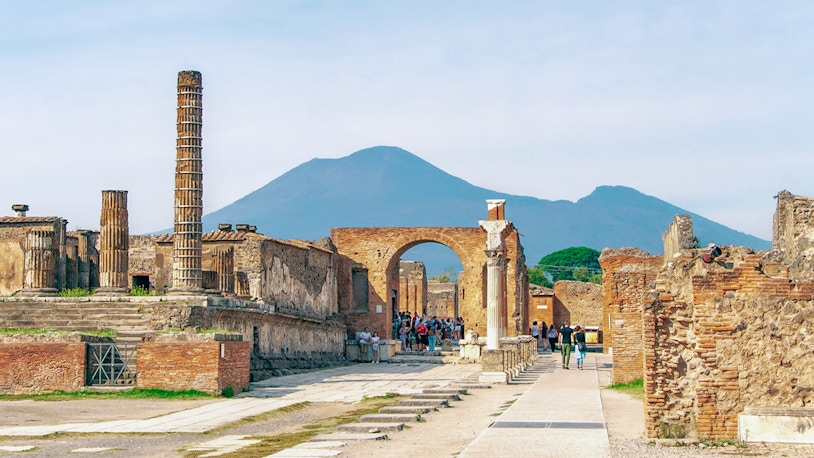
The Italian police began an investigation into the mosaic’s origins. While they were able to trace the artifact back to the area destroyed by Mount Vesuvius in 79 AD, some details about its discovery and journey through time were missing. The lack of clear documentation made the process of verifying the mosaic’s provenance challenging.
Gabriel Zuchtriegel, the director of the Pompeii Archaeological Park, expressed gratitude for the return of the artifact. He emphasized that while the material value of the mosaic may not be immense, its historical significance is invaluable. “Every looted artifact that returns is a wound that heals,” he said. “The wound lies not so much in the material value of the work, but in its historical value; a value that is severely compromised by the illicit trafficking of antiquities.”
A New Chapter for the Mosaic
Once the investigation was complete, the mosaic was officially returned to the Pompeii Archaeological Park. It will now be temporarily displayed at a museum within the site, allowing the public to see this remarkable piece of history up close.
The park plans to conduct further tests to gather more information about the mosaic’s past. However, Zuchtriegel acknowledged that some details may never be uncovered. “We don’t know the artifact’s exact provenance and likely never will,” he said. “But we will do everything possible to piece together its history.”
A Legacy of Erotic Art in Pompeii
This is not the first time that erotic art has been discovered in Pompeii. Over the years, archaeologists have uncovered numerous frescoes and mosaics that depict intimate scenes from Roman life. These findings provide valuable insights into the culture, daily activities, and artistic expressions of the ancient world.
In October 2024, a tiny house adorned with erotic frescoes was uncovered at the site. Another house, filled with elaborate and sometimes racy frescoes, reopened to the public in January 2023 after being closed for 20 years. Additionally, in 2018, a fresco depicting an erotic scene from the Greek myth of Leda and the Swan was discovered.
These discoveries continue to shed light on the complex and diverse nature of Roman society, revealing aspects of life that were often hidden or overlooked in more formal historical records.
The Importance of Cultural Preservation
The return of the mosaic highlights the ongoing efforts to protect and preserve cultural heritage. As global conflicts and illegal trafficking continue to threaten historical artifacts, institutions like the Pompeii Archaeological Park play a crucial role in ensuring that these pieces of history are not lost forever.
Through collaboration with law enforcement, researchers, and the public, such efforts help to restore what was taken and ensure that future generations can learn from and appreciate the rich legacy of the past.